Washer Maintenance Tips: Prevent Odors, Leaks & Costly Repairs
Regular washer maintenance can help prevent unpleasant odors, drainage issues, leaks, and unexpected breakdowns. Whether you own a front-load or top-load washing machine, these simple maintenance tips can help keep your washer operating efficiently and extend its lifespan. Science Appliance proudly provides washer repair and maintenance services throughout Lubbock and the South Plains.
Front-Load Washer Odor & Mildew Prevention
One of the most common washing machine complaints we hear—especially with front-load washers—is a mildew or musty smell. Fortunately, this issue is often preventable with proper care.
To help prevent front-load washer odors:
Use only HE (High-Efficiency) detergent.
Use the correct amount of detergent. Most loads require only about 2 tablespoons of HE detergent.
Run a hot wash cycle periodically to help remove detergent residue and buildup.
Leave the washer door open between uses to allow the interior to dry.
Clean the weep holes at the 6 o'clock position of the door seal using tweezers or needle-nose pliers.
Wipe down the door seal (boot) regularly to remove moisture, detergent residue, and debris.
These simple steps can help prevent mildew growth and keep your washing machine smelling fresh.
Not sure how much detergent to use? Read our guide on choosing the right laundry detergent and using the correct amount to help prevent odor, residue buildup, and poor washing performance.
Washer Drain Filter Maintenance
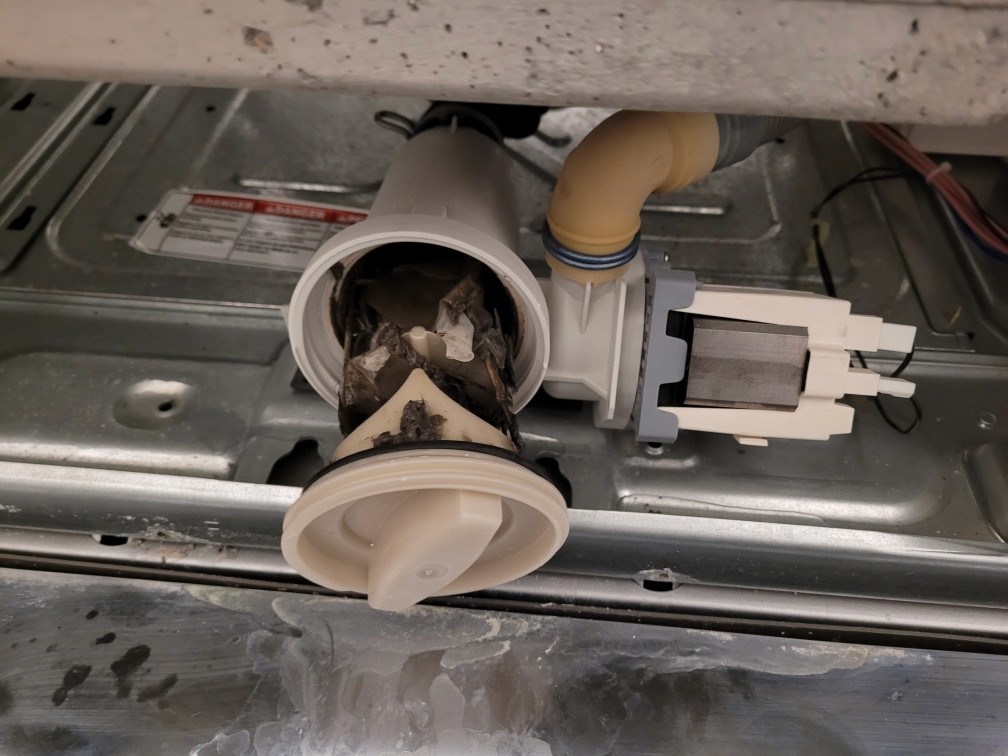
If your clothes are still very wet at the end of a cycle or your washer is not draining properly, a clogged drain filter may be the cause.
If your washing machine has a homeowner-accessible drain filter, we recommend cleaning it every 3–4 months. Always consult your owner's manual for model-specific instructions.
If your washer still won't drain after cleaning the filter, professional washer repair may be needed to diagnose drain pump, control board, or drainage system issues.
How to Clean a Washer Drain Filter
Remove the filter access panel, usually located near the bottom of the machine.
Drain the pump using the built-in drain hose into a shallow pan or basin.
Unscrew and remove the filter.
Remove lint, coins, hairpins, and other debris.
Soak the filter in hot water to help break down residue and buildup.
Gently scrub with a soft brush and rinse thoroughly.
Remove any debris from the filter housing.
Reinstall the filter securely before operating the washer.
Regular drain filter maintenance can improve drainage performance and help prevent costly washer repairs.
Common Washer Leak Causes
If your washer is leaking, there are several simple checks you can perform before scheduling service.
Check Your Water Supply Hoses
Inspect hoses for drips, cracks, bulges, or signs of wear.
Check hose connections at both the wall and the washing machine.
Washing machine hoses should be inspected regularly and replaced when signs of wear appear. Learn more about inspecting and maintaining your washer drain and fill hoses.
Inspect the Door Seal
Clean the front door glass and rubber door seal regularly.
Even small debris can prevent the seal from closing properly and cause leaks.
Check the Drain System
Observe a drain cycle to look for drain hose leaks.
Check for standpipe overflows or drainage restrictions.
Many washer leaks can be identified early through routine inspections and maintenance.
Frequently Asked Questions
Why does my front-load washer smell like mildew?
Mildew odors are often caused by moisture, detergent residue, and poor airflow inside the washer. Using the correct detergent, cleaning the door seal, and leaving the door open between uses can help prevent odors.
How often should I clean my washer drain filter?
Most homeowner-accessible filters should be cleaned every 3–4 months, though heavily used washers may require more frequent cleaning.
Why are my clothes still wet after a wash cycle?
A clogged drain filter, restricted drain pump, or drainage issue may prevent the washer from properly removing water.
Can regular washer maintenance prevent repairs?
Yes. Routine maintenance can help identify potential problems before they become major repairs and can extend the life of your appliance.
While maintenance can prevent many common issues, some problems require professional washer repair service to properly diagnose and correct.
How often should washing machine hoses be replaced?
Washing machine fill hoses should be inspected regularly for cracks, bulges, corrosion, and leaks. For more information, read our guide on washer drain and fill hose maintenance.
Schedule Washer Maintenance in Lubbock & the South Plains
Our skilled Appliantists can inspect your washer, hoses, drainage system, door seal, and other critical components to help keep your appliance operating efficiently and reliably.
Regular maintenance can help prevent unexpected breakdowns, improve performance, and reduce the likelihood of costly repairs.
View our transparent pricing and schedule service today:
https://www.scienceappliance.com/pricing
Need help with a washer that smells, leaks, won't drain, or isn't spinning properly? Contact Science Appliance for professional washer repair and maintenance services throughout Lubbock and the South Plains.
Related Washer Resources
Front-Load Washer Odor & Mildew Prevention
One of the most common washing machine complaints we hear—especially with front-load washers—is a mildew or musty smell. Fortunately, this issue is often preventable with proper care.
To help prevent front-load washer odors:
Use only HE (High-Efficiency) detergent.
Use the correct amount of detergent. Most loads require only about 2 tablespoons of HE detergent.
Run a hot wash cycle periodically to help remove detergent residue and buildup.
Leave the washer door open between uses to allow the interior to dry.
Clean the weep holes at the 6 o'clock position of the door seal using tweezers or needle-nose pliers.
Wipe down the door seal (boot) regularly to remove moisture, detergent residue, and debris.
These simple steps can help prevent mildew growth and keep your washing machine smelling fresh.
Not sure how much detergent to use? Read our guide on choosing the right laundry detergent and using the correct amount to help prevent odor, residue buildup, and poor washing performance.
Washer Drain Filter Maintenance
If your clothes are still very wet at the end of a cycle or your washer is not draining properly, a clogged drain filter may be the cause.
If your washing machine has a homeowner-accessible drain filter, we recommend cleaning it every 3–4 months. Always consult your owner's manual for model-specific instructions.
If your washer still won't drain after cleaning the filter, professional washer repair may be needed to diagnose drain pump, control board, or drainage system issues.
How to Clean a Washer Drain Filter
Remove the filter access panel, usually located near the bottom of the machine.
Drain the pump using the built-in drain hose into a shallow pan or basin.
Unscrew and remove the filter.
Remove lint, coins, hairpins, and other debris.
Soak the filter in hot water to help break down residue and buildup.
Gently scrub with a soft brush and rinse thoroughly.
Remove any debris from the filter housing.
Reinstall the filter securely before operating the washer.
Regular drain filter maintenance can improve drainage performance and help prevent costly washer repairs.
Common Washer Leak Causes
If your washer is leaking, there are several simple checks you can perform before scheduling service.
Check Your Water Supply Hoses
Inspect hoses for drips, cracks, bulges, or signs of wear.
Check hose connections at both the wall and the washing machine.
Washing machine hoses should be inspected regularly and replaced when signs of wear appear. Learn more about inspecting and maintaining your washer drain and fill hoses.
Inspect the Door Seal
Clean the front door glass and rubber door seal regularly.
Even small debris can prevent the seal from closing properly and cause leaks.
Check the Drain System
Observe a drain cycle to look for drain hose leaks.
Check for standpipe overflows or drainage restrictions.
Many washer leaks can be identified early through routine inspections and maintenance.
Frequently Asked Questions
Why does my front-load washer smell like mildew?
Mildew odors are often caused by moisture, detergent residue, and poor airflow inside the washer. Using the correct detergent, cleaning the door seal, and leaving the door open between uses can help prevent odors.
How often should I clean my washer drain filter?
Most homeowner-accessible filters should be cleaned every 3–4 months, though heavily used washers may require more frequent cleaning.
Why are my clothes still wet after a wash cycle?
A clogged drain filter, restricted drain pump, or drainage issue may prevent the washer from properly removing water.
Can regular washer maintenance prevent repairs?
Yes. Routine maintenance can help identify potential problems before they become major repairs and can extend the life of your appliance.
While maintenance can prevent many common issues, some problems require professional washer repair service to properly diagnose and correct.
How often should washing machine hoses be replaced?
Washing machine fill hoses should be inspected regularly for cracks, bulges, corrosion, and leaks. For more information, read our guide on washer drain and fill hose maintenance.
Schedule Washer Maintenance in Lubbock & the South Plains
Our skilled Appliantists can inspect your washer, hoses, drainage system, door seal, and other critical components to help keep your appliance operating efficiently and reliably.
Regular maintenance can help prevent unexpected breakdowns, improve performance, and reduce the likelihood of costly repairs.
View our transparent pricing and schedule service today:
https://www.scienceappliance.com/pricing
Need help with a washer that smells, leaks, won't drain, or isn't spinning properly? Contact Science Appliance for professional washer repair and maintenance services throughout Lubbock and the South Plains.
Related Washer Resources
Other Projects
More Maintenance Tips
Schedule Appliance Service
Need appliance repair?
The fastest way to request service is through our online scheduler.
Request your preferred appointment date and time in just a few minutes. We'll review your request and contact you to confirm your appointment.
Need Something Else?
Have a question?
Interested in our monthly newsletter?
Looking for employment?
Property manager or warranty company?
Fill out the contact form below, and we'll get back to you as soon as possible.
Schedule Appliance Service
Need appliance repair?
The fastest way to request service is through our online scheduler.
Request your preferred appointment date and time in just a few minutes. We'll review your request and contact you to confirm your appointment.
Need Something Else?
Have a question?
Interested in our monthly newsletter?
Looking for employment?
Property manager or warranty company?
Fill out the contact form below, and we'll get back to you as soon as possible.
Schedule Appliance Service
Need appliance repair?
The fastest way to request service is through our online scheduler.
Request your preferred appointment date and time in just a few minutes. We'll review your request and contact you to confirm your appointment.
Need Something Else?
Have a question?
Interested in our monthly newsletter?
Looking for employment?
Property manager or warranty company?
Fill out the contact form below, and we'll get back to you as soon as possible.